
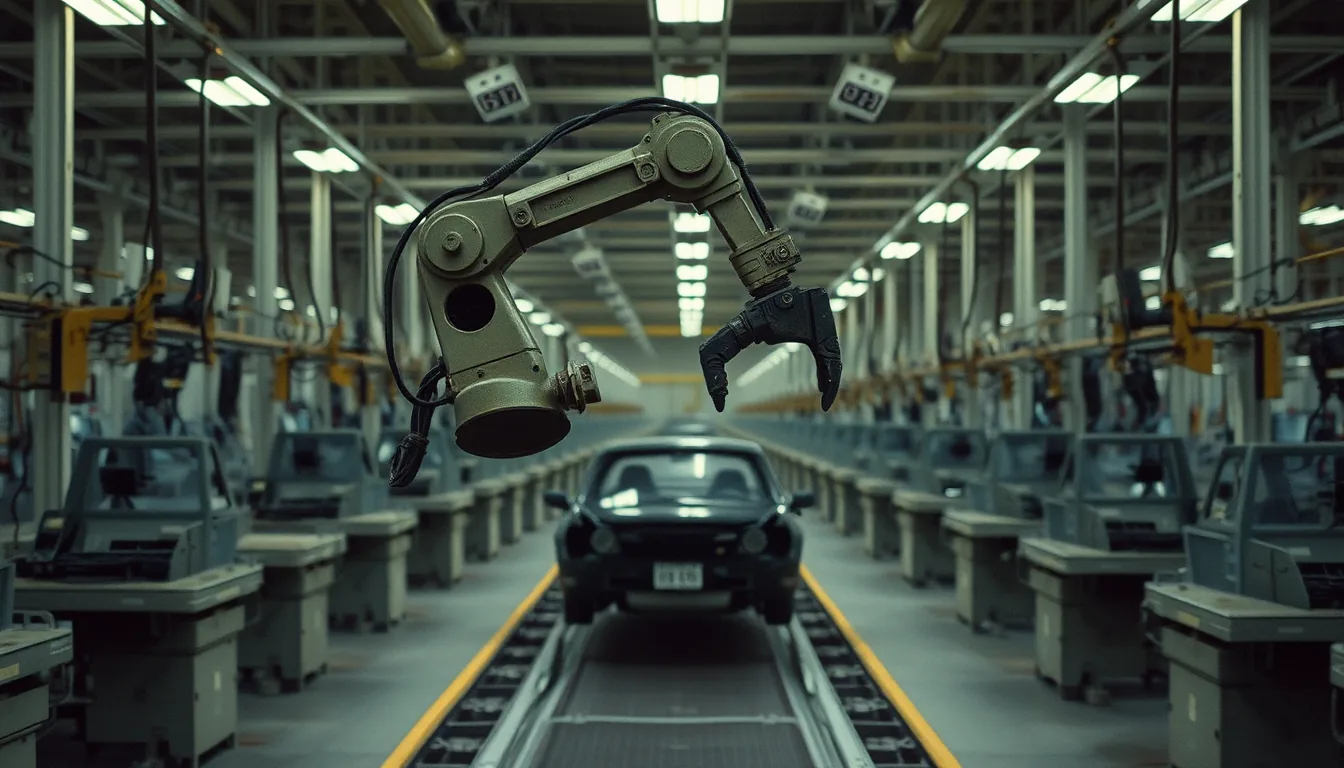
“The move to replace human workers with AI has backfired badly.” It’s a sentence that should have been the headline for every corporate “efficiency” drive since 2023. The moment a C-suite executive decides that a trillion-parameter model can replace a person who has spent twenty years figuring out why a specific robotic arm on the assembly line keeps twitching every Tuesday, the countdown to failure begins. It isn’t a surprise; it’s a mathematical certainty.
The logic here is painfully simple and equally stupid. Management looks at a spreadsheet, sees the cost of human salaries, and compares it to the cost of an API subscription. They treat the manufacturing of a physical vehicle—a process involving thousands of parts, tight tolerances, and unpredictable physical variables—as if it were a software project that could be optimized with a few well-placed prompts. They’ve fallen for the delusion that “intelligence” is a commodity you can buy by the token, forgetting that the “intelligence” required to run a plant is often held in the muscle memory of a worker who has been there for three decades (likely the ones who have never actually stepped foot on a factory floor).
This is where the Independent report hits the hardest. Ford didn’t just lose “workers”; they lost the institutional memory that prevents a factory from grinding to a halt. Does anyone actually believe that a prompt can replace thirty years of knowing exactly how a specific lathe behaves when the humidity hits 80%? You can’t train a model on a PDF of a technical manual and expect it to handle the reality of a stripped bolt or a misaligned chassis in real-time. The friction here isn’t a software bug that can be patched in the next sprint; it’s the physical cost of scrap metal and the brutal expense of downtime that piles up while the AI confidently suggests a solution that is physically impossible to implement.
It’s the same brand of hubris we see in other industries. Replacing a seasoned expert with a cheap automation tool is like replacing a Michelin-star chef with a high-end microwave because the microwave is faster and doesn’t ask for a pension. Sure, the microwave can heat things up quickly, but it can’t taste the sauce to see if it needs more salt. It just follows the program until the kitchen is on fire, and then it wonders why the critics are complaining about the smell of burning plastic.
Then there is the human element, which corporate planners always treat as a nuisance rather than a requirement. The tension with the UAW and the broader workforce isn’t just about wages; it’s about the erasure of craft. When you tell a technician that their intuition is now a “redundant cost,” you don’t just lose that technician—you lose the loyalty of everyone who watched them get escorted out. You create a culture of fear where the remaining humans are too terrified to point out when the AI is hallucinating a critical safety step, because they’ve been told that the machine is the new standard.
Who actually thought this would work? The irony is that the cost of correcting this trajectory—the emergency consultants, the frantic attempts to rebuild lost workflows, and the damage to labor relations—will almost certainly outweigh the initial savings from the headcount reduction. It’s a classic case of being penny-wise and pound-foolish, executed on a global corporate scale. Because the physical world is stubbornly resistant to hallucinations, Ford will be forced to announce a “human-centric” pivot and re-hire a substantial portion of their technical workforce by Q4 just to keep the lines moving.
A total disaster.